

Last reviewed: September 14, 2026. This article is updated as the case develops. All dates below are drawn from court […]
Last reviewed: September 14, 2026. This article is updated as the case develops. All dates below are drawn from court records and contemporaneous reporting by WISN, TMJ4, CBS 58, Yahoo Sports, Sports Litigation Alert, and The Freeman (gmtoday.com).
If you are searching for the WIAA Arrowhead High School waiver lawsuit, you have likely already encountered a mix of partial summaries, outdated headlines, and confident claims that do not match the court record. This page exists to lay out what is documented, in order, with the outcome as it currently stands.
Why the Arrowhead Football Title Lawsuit Matters in 2026
What began in the summer of 2025 as a single student’s request to play his senior season has become the case most people now call the Arrowhead football title lawsuit. The reason is simple: the student played under a court order, his team won the Division 1 state championship, and the court order was later dissolved. Whether that championship survives now rests with the Wisconsin Interscholastic Athletic Association, not a judge.
Three facts anchor everything else:
- Tristen Seidl was allowed to play for Arrowhead in fall 2025 under a temporary injunction issued September 5, 2025.
- The lawsuit was dismissed as moot on July 1, 2026, with the written order entered July 6, 2026.
- No WIAA sanction has been publicly announced as of this review, and Arrowhead entered the 2026 season still recognized as the defending Division 1 champion.
Everything below explains how the case reached that point.
The Family and the House Fire
In October 2023, a fire destroyed the Dousman, Wisconsin home of Blayne and Jenell Seidl. Their son, Tristen, was a sophomore at Kettle Moraine High School at the time. Over the following eighteen months the family moved through four temporary residences while waiting to rebuild. They kept Tristen enrolled at Kettle Moraine on the expectation that they would return home.
That expectation collapsed in March 2025, when their contractor determined the house could not be repaired. It was demolished in April 2025. The family’s current rental in Lac La Belle — inside the Arrowhead Union High School District — became their permanent residence, with a lease running through June 1, 2026. They enrolled Tristen at Arrowhead for his senior year.
The WIAA’s Reasoning for Denying the Waiver
The WIAA’s transfer rule generally requires an upperclassman who changes schools to sit out varsity competition for a calendar year, unless the transfer is made necessary by a total and complete change in residence. The Seidls applied for a waiver under that exception.
On July 14, 2025, the WIAA ruled Tristen ineligible. Its position was that the family’s move into the Arrowhead district had occurred well before the school transfer, so the transfer itself was not compelled by a change of residence in the way the rule contemplates. That gap — the move happening early, the transfer happening late — is the technical dispute at the core of the Arrowhead football title lawsuit, and it is the point most casual summaries get wrong.
The Lawsuit and the Injunction
The Seidls filed suit against the WIAA in Waukesha County Circuit Court on August 19, 2025. Represented by attorney William Rettko, they asked the court to reverse the ineligibility ruling and argued that the WIAA was exercising authority over public school students that it had never been granted in law. The WIAA responded that its rules are a contractual arrangement voluntarily accepted by more than 500 member schools.
Judge Paul Bugenhagen Jr. heard the emergency injunction request on August 29, 2025, with Arrowhead players and coaches watching from the gallery. On September 5, 2025, he granted a temporary injunction barring the WIAA from preventing Seidl from playing varsity football during fall 2025 while the case proceeded. The WIAA said it would comply with the order while continuing to stand by its rules.
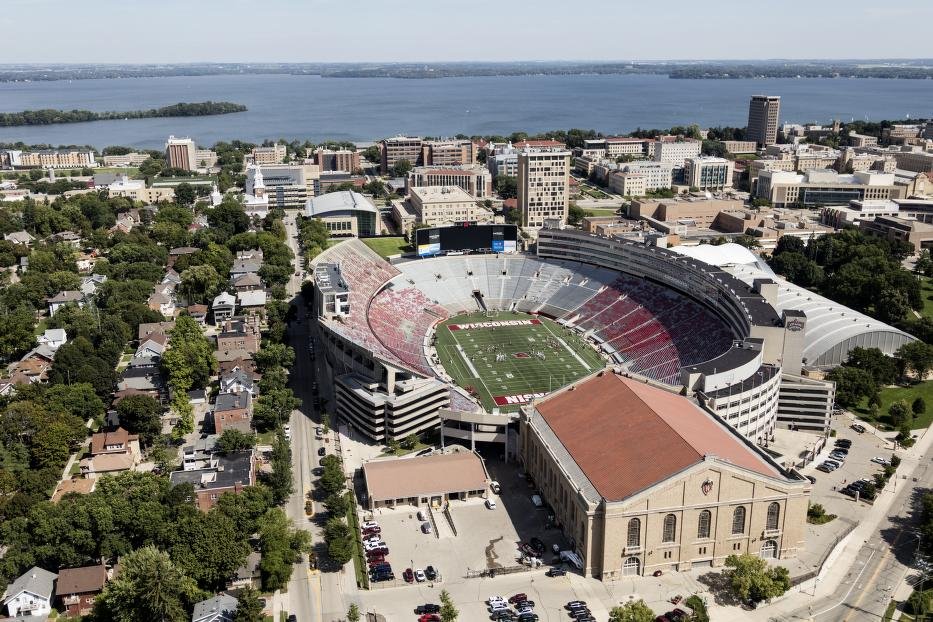
Seidl played nine games. Arrowhead finished 13-1 and defeated Bay Port 18-15 at Camp Randall Stadium on November 21, 2025, to win the WIAA Division 1 title — the program’s seventh state championship and its first since 2013.
The Case Continues Into 2026
In December 2025, Judge Bugenhagen denied a WIAA motion to dismiss, rejecting the association’s argument that it was beyond judicial review because it is not a government agency. Both sides filed further briefs on the question of the WIAA’s authority. Arrowhead was joined to the case as an involuntary plaintiff, and the district’s own counsel did not appear until April 2026.
By the June 2, 2026 hearing, the posture had changed. Seidl had finished his season and was about to graduate. His family asked the court to make the injunction permanent, arguing that dismissal would expose both Seidl and Arrowhead to WIAA penalties, including possible loss of the title. The WIAA countered that eligibility decisions are its responsibility and that a permanent ruling stripping that authority would affect tens of thousands of athletes statewide.
The July 2026 Mootness Ruling
On July 1, 2026, Judge Bugenhagen ruled from the bench that the case was moot. With the season over and Seidl graduated, the original controversy — a student wanting to play at the school where he was enrolled — no longer existed. He dissolved the temporary injunction and declined a request to shield Arrowhead from any future WIAA action, reasoning that the possibility of discretionary sanctions was not a ripe issue the court could decide. The written dismissal order was entered July 6, 2026, and nothing further is scheduled.
What the Arrowhead Football Title Lawsuit Dismissal Means for Sanctions
The dismissal did not determine that Seidl was ineligible, and it did not impose any penalty. What it did was remove the court order that had been protecting Arrowhead. Under Article I of the WIAA Rules of Eligibility, the association has authority to act in the interest of fairness to other member schools, and the listed penalties for team sports include forfeiture of affected contests, adjustment of conference standings, and the return of team and individual awards.
Following the ruling, the Seidls’ attorney indicated the family would not pursue further litigation. A WIAA spokesperson declined to comment on what the association intends to do. The Arrowhead School District acknowledged the decision in a statement without indicating what it expects next.
Where Things Stand Now
As of mid-September 2026, the situation is:
- The lawsuit is closed. There is no appeal pending.
- The WIAA has made no public announcement of sanctions against Arrowhead or Seidl.
- Arrowhead began its 2026 season as the defending Division 1 champion, ranked No. 1 in the state through the opening weeks.
Any claim that the title has already been stripped, or that the WIAA has formally cleared Arrowhead, is not supported by the record as of this date. Readers should treat both outcomes as possible until the WIAA acts or states that it will not.
Why This Case Resonates Beyond Wisconsin
Eligibility disputes rarely reach a courtroom. Most end at the association’s internal appeal stage, which is part of why this case drew coverage across the state and in national sports-law publications. The underlying tension is easy to recognize for any family that has dealt with a school transfer: a rule written to prevent recruiting and competitive shopping was applied to a family displaced by a house fire, and the timing requirements of that rule did not fit the reality of prolonged temporary housing.
The case also raised a broader legal question that the mootness ruling left unanswered — whether a private interscholastic association exercises authority over public school students that is subject to judicial review. That question will likely surface again in a future dispute.
Researching This Case Online
Search results for this case include a number of low-quality, AI-generated pages that invent settlement figures, misstate the dismissal as a ruling on the merits, or report the title as already forfeited. None of that is supported by the sources cited here. When using an AI assistant to research this or any legal dispute, ask it to identify the outlet and date behind each claim, and be skeptical of confident statements about final outcomes that no named publication has reported. Lawsuitwiki.com applies the same standard across its coverage of eligibility disputes, rideshare injury claims, and other litigation: dated facts, attributed sources, and clear labeling of what remains unresolved.
Frequently Asked Questions
Who is the student at the center of the WIAA Arrowhead lawsuit? Tristen Seidl, a 2026 Arrowhead graduate whose parents, Blayne and Jenell Seidl, sued the WIAA in August 2025 after it denied his transfer waiver.
Why did the WIAA deny the waiver? The WIAA concluded the family’s move into the Arrowhead district predated the school transfer by a significant margin, so the transfer was not compelled by a change in residence under its rule.
Did Tristen Seidl play in 2025? Yes. A temporary injunction issued September 5, 2025 allowed him to play the full season. He appeared in nine games for the state championship team.
How did the lawsuit end? Judge Paul Bugenhagen Jr. dismissed the case as moot on July 1, 2026. The order was entered July 6, 2026. The family has said it will not appeal.
Has Arrowhead lost its 2025 state title? No. As of September 2026, the WIAA has not announced any sanction, and Arrowhead is competing in 2026 as the defending Division 1 champion. The WIAA retains authority to act, and no public decision has been reported either way.
What penalties could the WIAA impose? Under its eligibility rules, the WIAA may order forfeiture of contests involving an ineligible player, adjust standings, and require the return of team and individual awards.
Where can I read the original reporting? TMJ4, WISN, CBS 58, Yahoo Sports, Sports Litigation Alert, USA Today High School Sports, and The Freeman (gmtoday.com) covered the case from the July 2025 waiver denial through the July 2026 dismissal.
